📚 Educational reference — no pricing, not for sale. Independent used-machine research and seller-source discovery are available in our market directory.
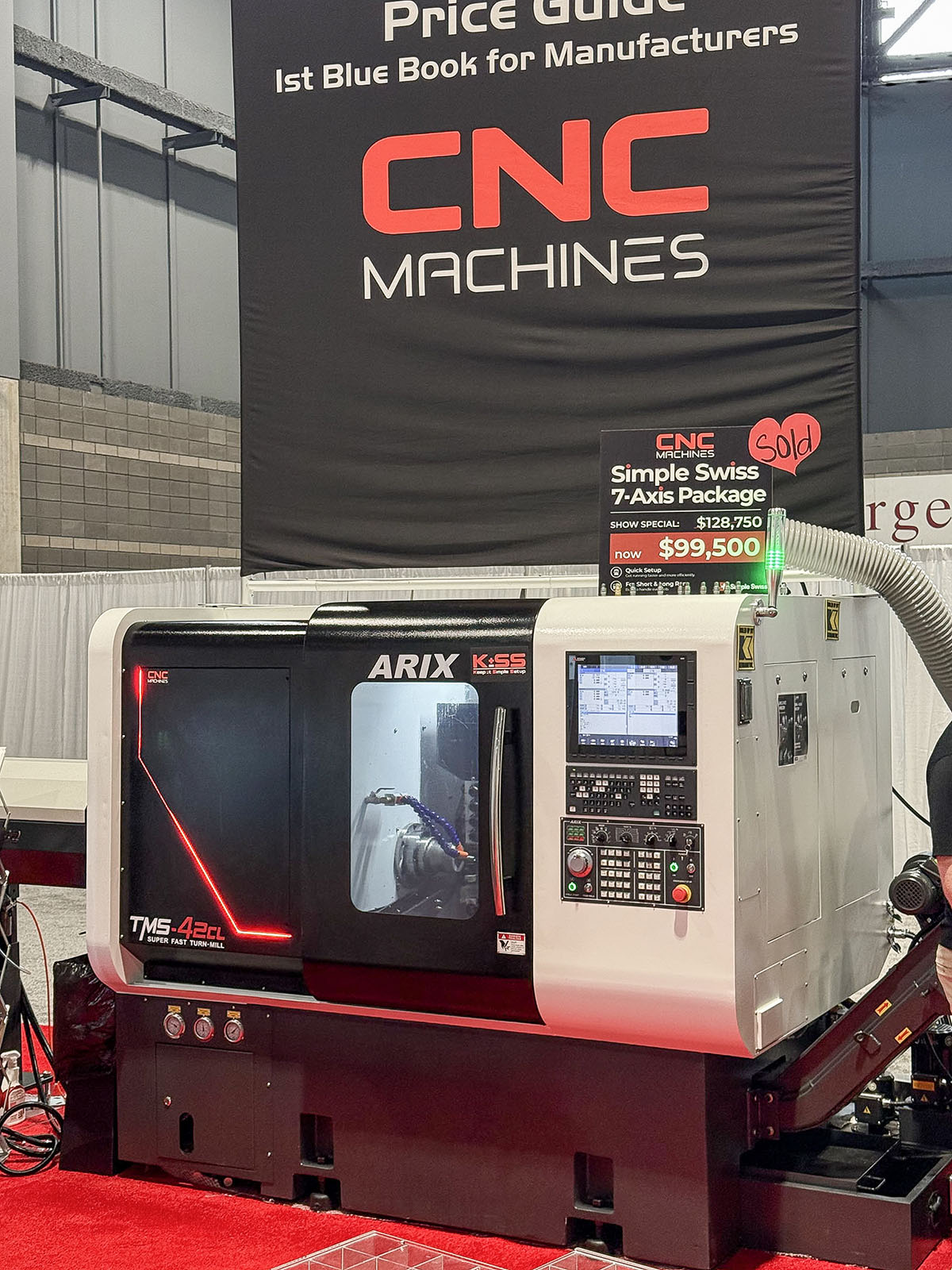
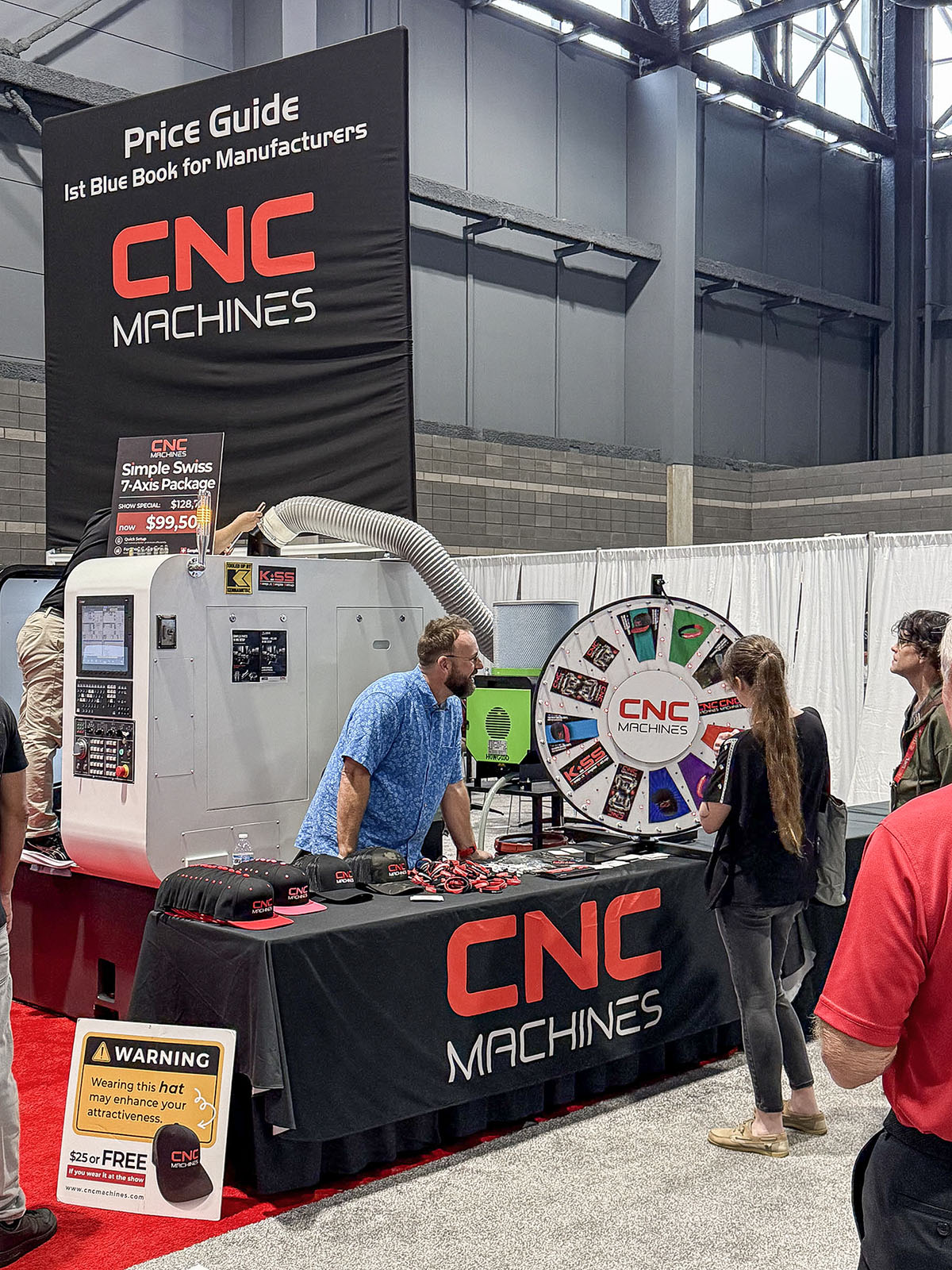
Field observation · IMTS 2026. Original show-floor photography documents the displayed TMS-42CL enclosure and installation. Visible show equipment is not proof that every accessory is standard; confirm the build sheet for any individual machine.
Manufacturer-source note · reviewed September 25, 2026. Values follow the current TMS42CL specification sheet linked from ARIX’s official TMS Series page. Published specifications can change by market, control package, and build revision; match any used machine to its serial number and original build sheet.
What the ARIX TMS42CL is
ARIX describes the TMS42CL as a turning-milling CNC lathe with a synchronous internal-turning tailstock. The main tool group handles outside turning and live-tool work while the separate X1/Z1 internal-turning unit carries five I.D. tools. ARIX positions that arrangement as a way to perform selected internal and external operations in parallel and states that it can save about 40% of machining time. That figure is a manufacturer claim, not a guaranteed cycle-time result; the benefit depends on part geometry, toolpath balance, workholding, and the purchased configuration.
This architecture is useful to distinguish from a conventional tailstock and from a subspindle. The current official sheet lists the TMS42CL subspindle as not applicable. It is therefore best evaluated using ARIX’s own terminology: a turning-milling CNC lathe with a synchronous internal-turning tailstock, not a twin-spindle lathe.
Original IMTS field notes
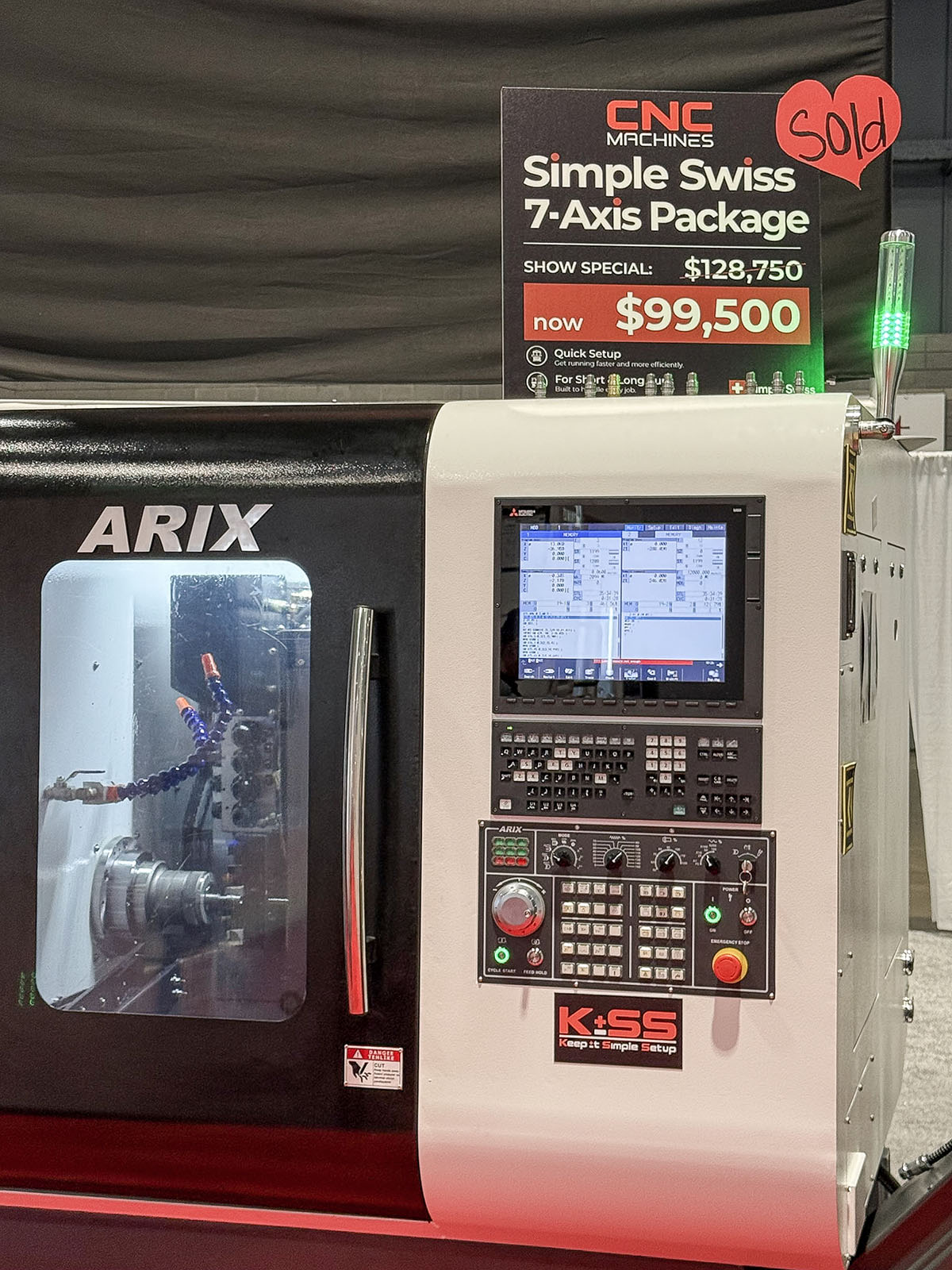
Field observation · IMTS 2026. The original photographs show the TMS-42CL nameplate, enclosed work zone, operator/control area, and show-floor installation. They document the displayed machine, not its production accuracy, maintenance condition, or which visible accessories were included in the base price.
Field observation. The control and operator station on the displayed TMS-42CL. Confirm the exact control make, software options, and parameter backup on a machine being evaluated.Field observation. The machine in its IMTS show-floor context. The photograph adds scale and installation context; it does not verify cutting performance.
Where it may fit
The published 42 mm bar capacity and 130 mm maximum turning diameter point toward smaller turned components that benefit from live tooling and substantial internal work. The synchronous internal-turning unit may be especially relevant when a process plan can overlap bore work with operations at the main tool group. Shops considering the model should time a representative part rather than infer throughput from axis count alone.
What to verify on a specific machine
Identity and configuration: serial number, build year, original option sheet, control model, software options, electrical requirements, manuals, and parameter backups.
Tooling package: live-tool speed and power, holder inventory, collet and chuck package, tailstock I.D.-tool arrangement, and whether bar feeder, part catcher, chip conveyor, or mist equipment is included.
Geometry and motion: spindle condition, axis backlash, X1/Z1 alignment, live-tool runout, turret or tool-block alignment, and a cutting test using a part that exercises simultaneous internal and external work.
Capacity assumptions: verify the real work envelope with the intended chuck, tooling, stock, and collision-clearance model. Published maxima are not all available at once in every setup.
Architecture: the official sheet does not list a subspindle. Do not treat the internal-turning tailstock as one; confirm how finished parts are supported, unloaded, and transferred in the intended process.