
Independent · source-linked · manufacturing-first
An orthopedic implant is not defined by its final shape alone. Material history, manufacturing route, surface condition, cleanliness, inspection evidence and device-specific regulatory requirements all travel with the part.
Start with intended use and classification
The same manufacturing technology can produce devices with different intended uses and regulatory pathways. FDA classifies device types according to risk and controls; a manufacturer must determine the applicable classification, product code and premarket route rather than assuming that one orthopedic category covers every implant.
The manufacturing chain
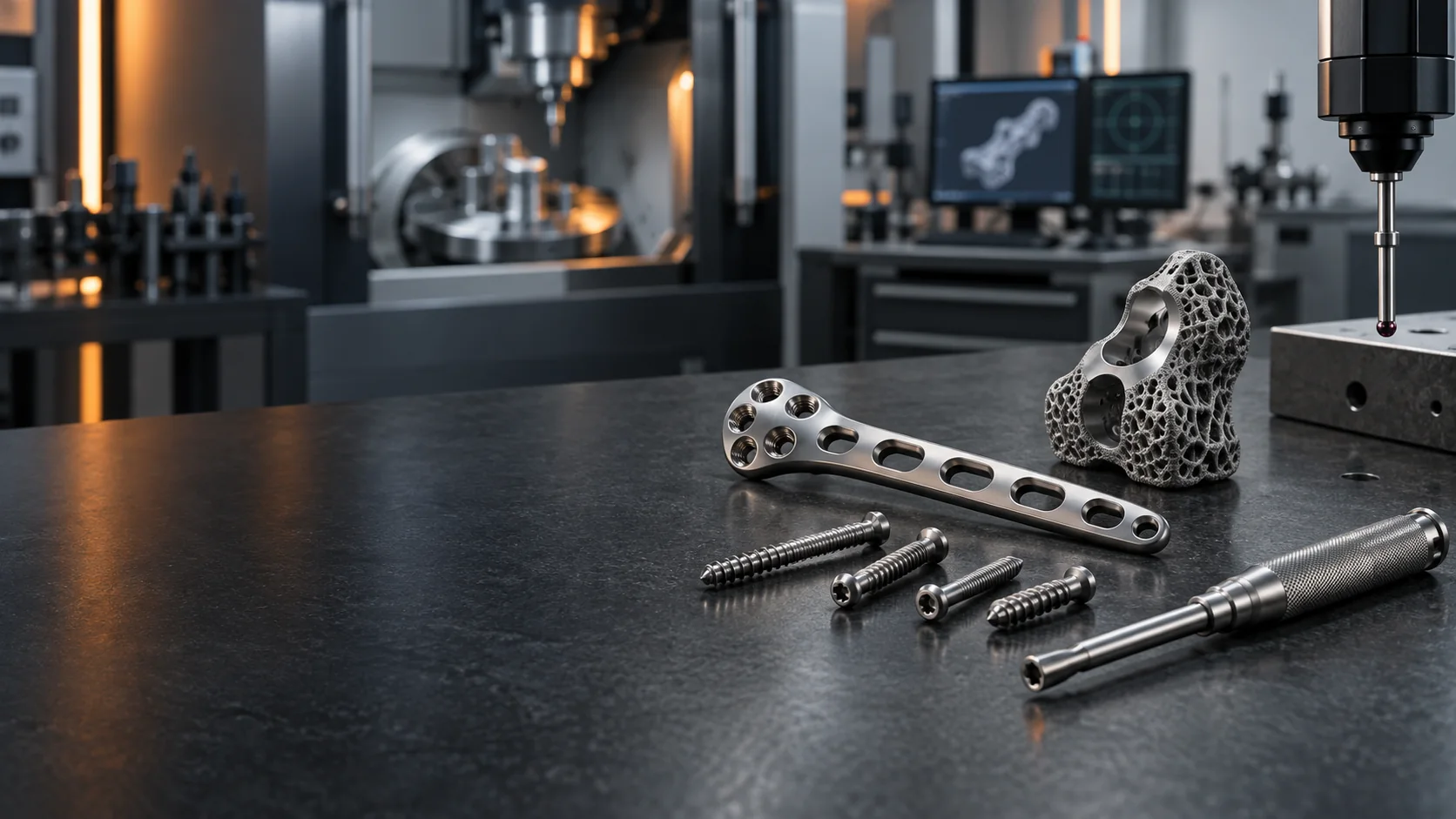
A typical control plan may connect certified raw material, machining or additive build records, heat treatment where applicable, surface finishing, dimensional verification, cleaning, packaging and release. The exact route depends on design, material, patient-contact profile, sterility claims and the manufacturer's validated process.
Geometry and surface are separate requirements
A CMM result can confirm accessible geometry but does not by itself establish surface integrity, internal structure, cleanliness or biological safety. Manufacturers choose complementary evidence—optical measurement, roughness, microscopy, CT, mechanical testing or validated cleaning—according to the device and its risks.
Supplier questions
Buyers should ask how material identity is preserved, how revision and lot data move through outside operations, which features require special capability and which records return with each lot. Capability is not a machine list; it is a controlled system that produces usable evidence.
Move from research to the machine
Use the manufacturing context here, then compare machine platforms, values and supporting technology inside Machine Blue Book.
Continue the medical manufacturing map
Primary sources and verification
Official sources control current regulatory, product and company facts. MBB last checked these links on September 28, 2026.
Independent educational reference: Machine Blue Book is not affiliated with Arthrex, FDA, ISO or any manufacturer named on this page. Names are used descriptively and linked to primary sources. This material is not medical, legal, regulatory or clinical advice and does not recommend a device for patient care.