
Independent · source-linked · manufacturing-first
Medical CNC work is not ordinary job-shop work with a different label. The machine, people, coolant, fixtures, inspection and records must operate as one controlled production system.
What makes medical device machining different?
Medical device machining connects tight geometry to material identity, surface condition, cleanliness, risk control and traceable release. A machine can hold tolerance and still be the wrong production system if it cannot protect material, manage burrs and contamination, support the inspection plan or preserve the required records.
Bone screws and pins
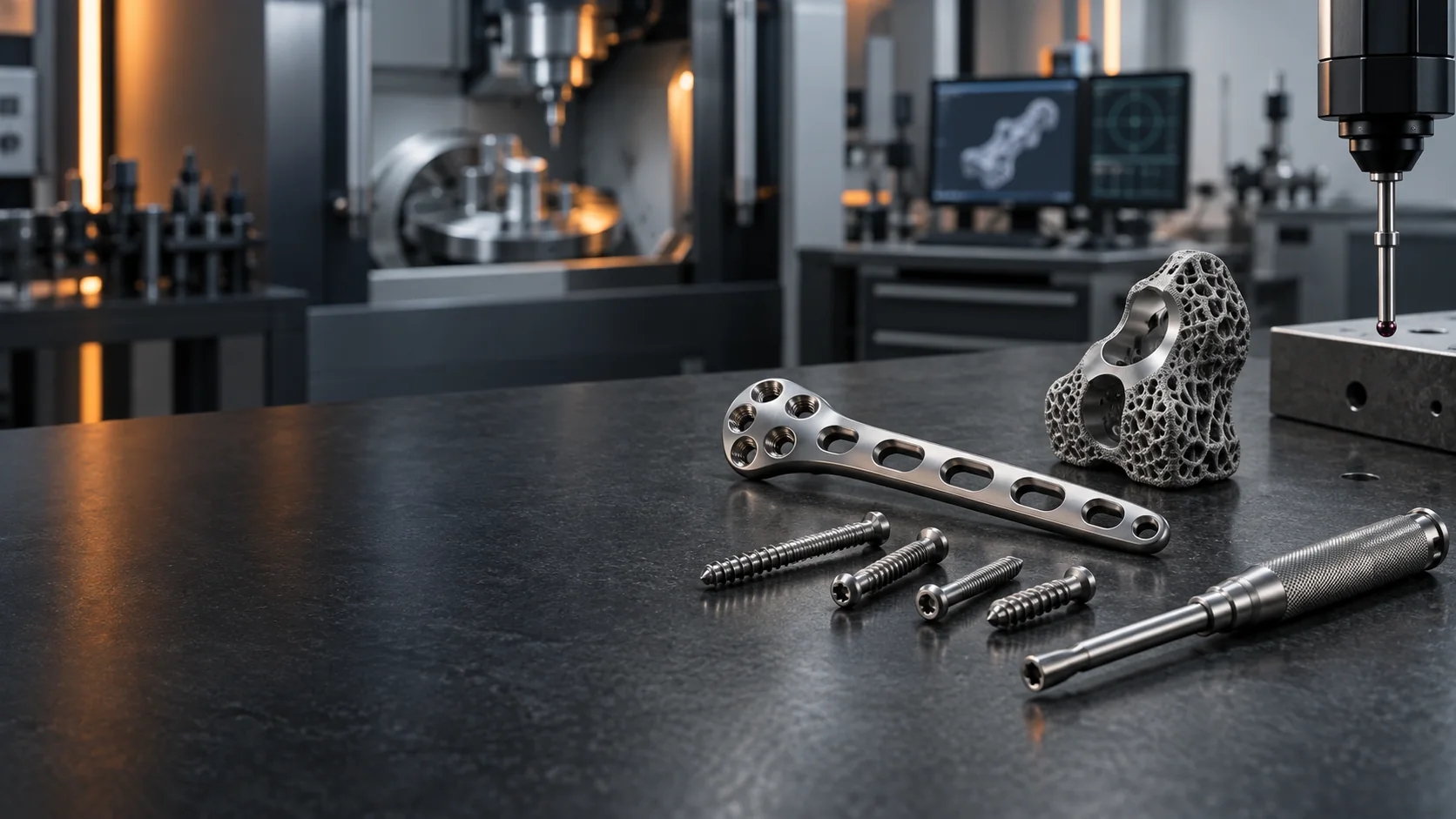
Swiss turning or mill-turn work may combine thread form, drive geometry and tiny cross features. Preserve lot identity, tool-life limits, burr-control and inspection evidence.
Bone plates and implants
5-axis machining supports contoured surfaces and hole relationships. Verify datum strategy, fixture access, surface condition, dimensional results and cleaning.
Surgical instruments
CNC, EDM and grinding may share the route. Functional joints, edges, finish, corrosion resistance and reprocessing compatibility can be as important as dimensions.
Additive medical components
Printing is one stage. Build controls, support removal, heat treatment, machining, surface finishing, CT or metrology and final cleaning form the production route.
Choose the process around the part
Small turned components, freeform plates, instruments and implantable devices have different needs. Envelope and axis count are only the start. Look at spindle behavior, thermal stability, probing, workholding, tool management, chip evacuation and the inspection route.
Control contamination and identity
Material segregation, coolant management, cleaning and controlled handling should match the manufacturer's validated plan. The lot and revision identity must survive setup, rework, outside processing and final release.
Use probing correctly
On-machine probing can establish work offsets, confirm setup conditions and support process control. It does not automatically replace an independent final measurement system or device-specific validation. The control plan determines what each measurement means.
Build for repeatability
A capable first article is not the same as a stable production process. Tool-life limits, fixture verification, environmental effects, software revision and reaction plans matter when the same process must keep producing acceptable evidence.
Move from research to the machine
Use the manufacturing context here, then compare machine platforms, values and supporting technology inside Machine Blue Book.
Continue the medical manufacturing map
Primary sources and verification
Official sources control current regulatory, product and company facts. MBB last checked these links on October 7, 2026.
Independent educational reference: Machine Blue Book is not affiliated with Arthrex, FDA, ISO or any manufacturer named on this page. Names are used descriptively and linked to primary sources. This material is not medical, legal, regulatory or clinical advice and does not recommend a device for patient care.