
Independent · source-linked · manufacturing-first
Five-axis machining can reduce setups and improve access to contoured medical parts. It does not remove the need for stable workholding, verified kinematics, current postprocessors and a measurement plan tied to function.
3+2 versus simultaneous motion
Indexed 3+2 work reorients the part and cuts with fixed rotary axes. Simultaneous 5-axis coordinates linear and rotary movement during the cut. Both can be correct. Select the simpler strategy when it controls the geometry and reserve simultaneous motion for features, access or finish that need it.
Medical use cases
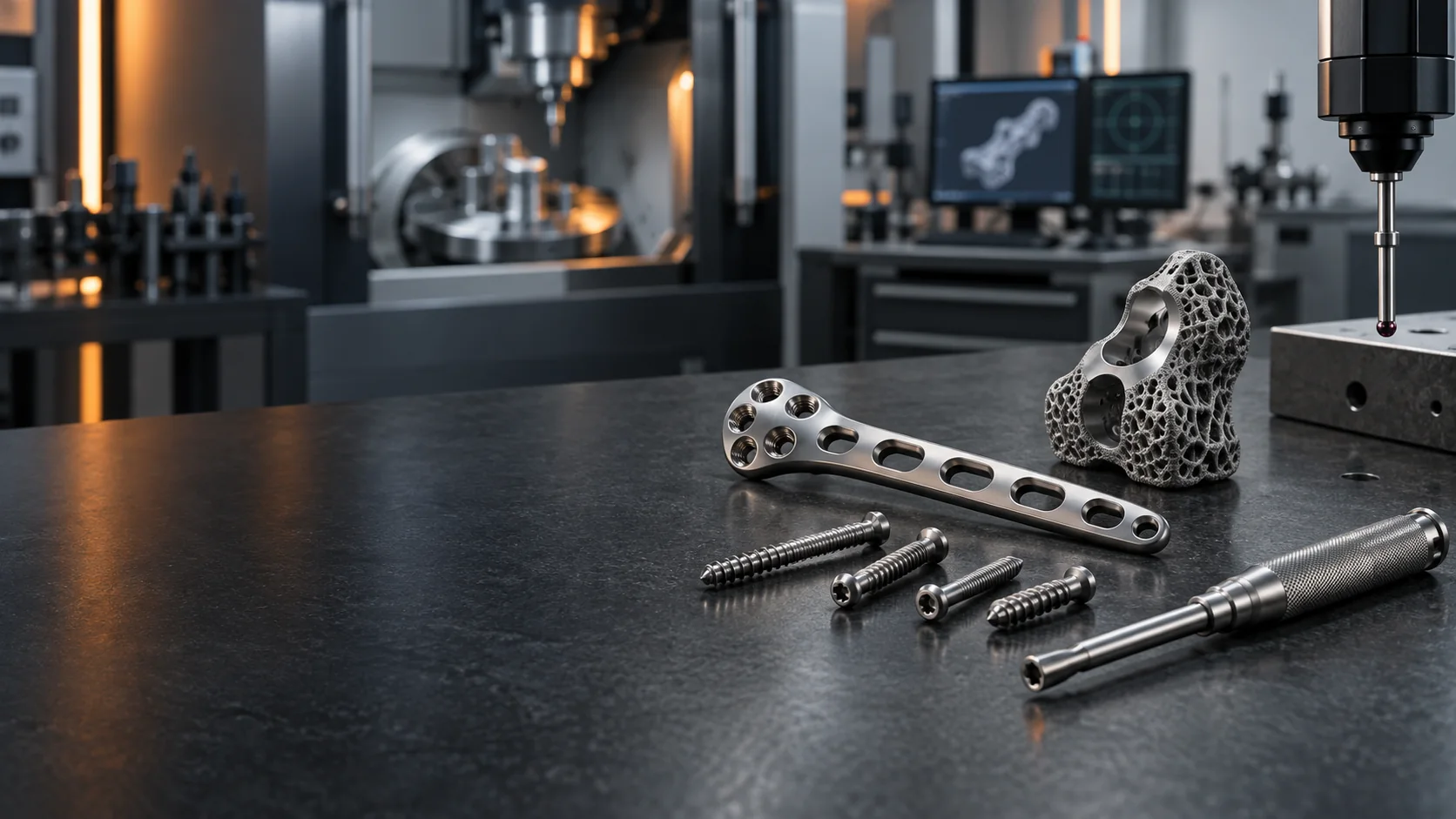
Contoured bone plates, instrument jaws, implant features and complex fixtures can benefit from multi-face access. Fewer setups can reduce datum transfers and handling, while shorter tools can improve stiffness. The actual gain depends on the complete route, not axis count alone.
Machine verification
Rotary-center accuracy, tool-center-point behavior, probing routines, collision control and postprocessor output should be proven. A simulation that looks clean is not a substitute for machine-state verification or first-article evidence.
Buying questions
Ask for actual configuration, control options, probing package, tool capacity, service support, rotary limits, postprocessor availability and proven parts near your size and material. Use MBB's machine directory to research platforms, then validate the exact serial-number configuration with the seller or OEM.
Move from research to the machine
Use the manufacturing context here, then compare machine platforms, values and supporting technology inside Machine Blue Book.
Continue the medical manufacturing map
Primary sources and verification
Official sources control current regulatory, product and company facts. MBB last checked these links on September 28, 2026.
Independent educational reference: Machine Blue Book is not affiliated with Arthrex, FDA, ISO or any manufacturer named on this page. Names are used descriptively and linked to primary sources. This material is not medical, legal, regulatory or clinical advice and does not recommend a device for patient care.