
Source-linked manufacturing analysis
The hardest Formula 1 parts do not face one clean load. They see combinations of vibration, bending, torsion, heat, pressure, impact, wear and repeated cycles—all while mass and package space are aggressively constrained.
Stress begins before machining
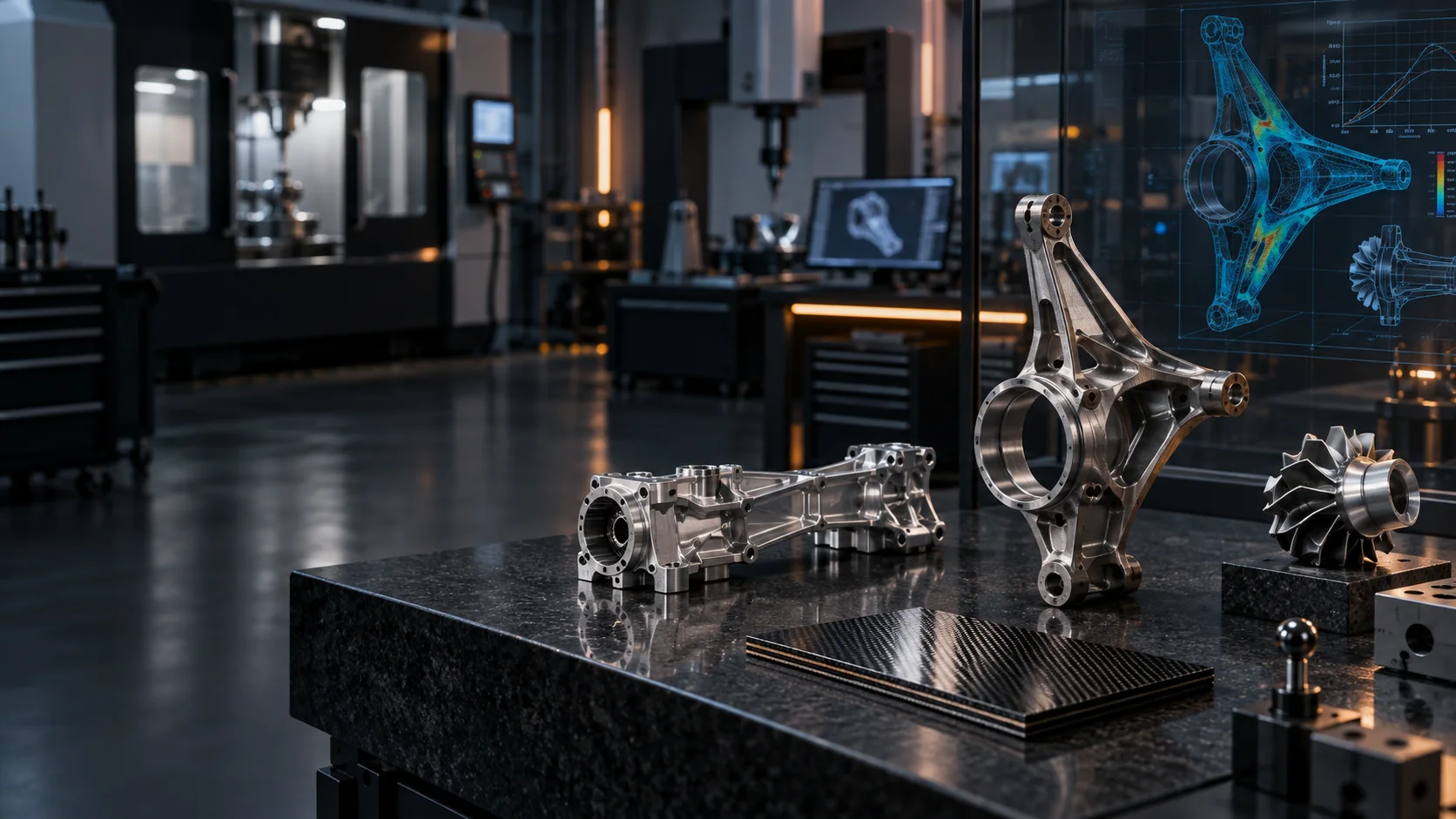
Finite-element analysis, simulation, test data and previous part history inform geometry and material choice. The released drawing and model convert that design intent into datums, dimensions, surface requirements and acceptance criteria a manufacturing team can control.
Surface integrity matters
A part can meet size and still carry tool marks, recast layer, tensile residual stress, burrs or edge conditions that alter fatigue behavior. Cutting parameters, tool condition, EDM strategy, deburring, grinding, shot peening, coating or other finishing must be selected around the complete requirement.
Heat treatment is part of the route
Material condition before and after machining affects distortion, hardness and performance. Process sequence, stock allowance, stress relief and final inspection should anticipate movement rather than treating it as an unexplained final-measurement surprise.
Life control closes the loop
High-stress components can require serialized identity, defined inspection, controlled service life and teardown evidence. Formula 1 teams keep detailed proprietary limits private. The public manufacturing lesson is the system: design assumption, produced condition, verified result and observed life must remain connected.
Connect the engineering system
CNC machining
Follow design intent into workholding, datums, tools and controlled part release.
Open guide →Primary sources and verification
Official sources control current rules, partnerships and disclosed technology. MBB last checked these links on September 28, 2026.
Independent reference: Machine Blue Book is not affiliated with Formula 1, the FIA, McLaren or any team or partner. Names are used descriptively. No team logos, race photography or sponsor artwork are used.