
Source-linked manufacturing analysis
AI in Formula 1 is not a robot driving the race car. Public team sources show it working as an engineering amplifier: reducing the search space, connecting data, accelerating analysis and helping people make better decisions under severe time pressure.
What teams actually publish
McLaren describes AI supporting setup simulations, tyre-behavior forecasting, image analysis and broader decision support. In 2026, the team stated that its Dell AI Factory processes up to 1.5 terabytes of data per race weekend for simulation, digital-twin modeling and real-time scenario planning. Those are public team claims, not estimates from MBB.
From AI output to a physical part
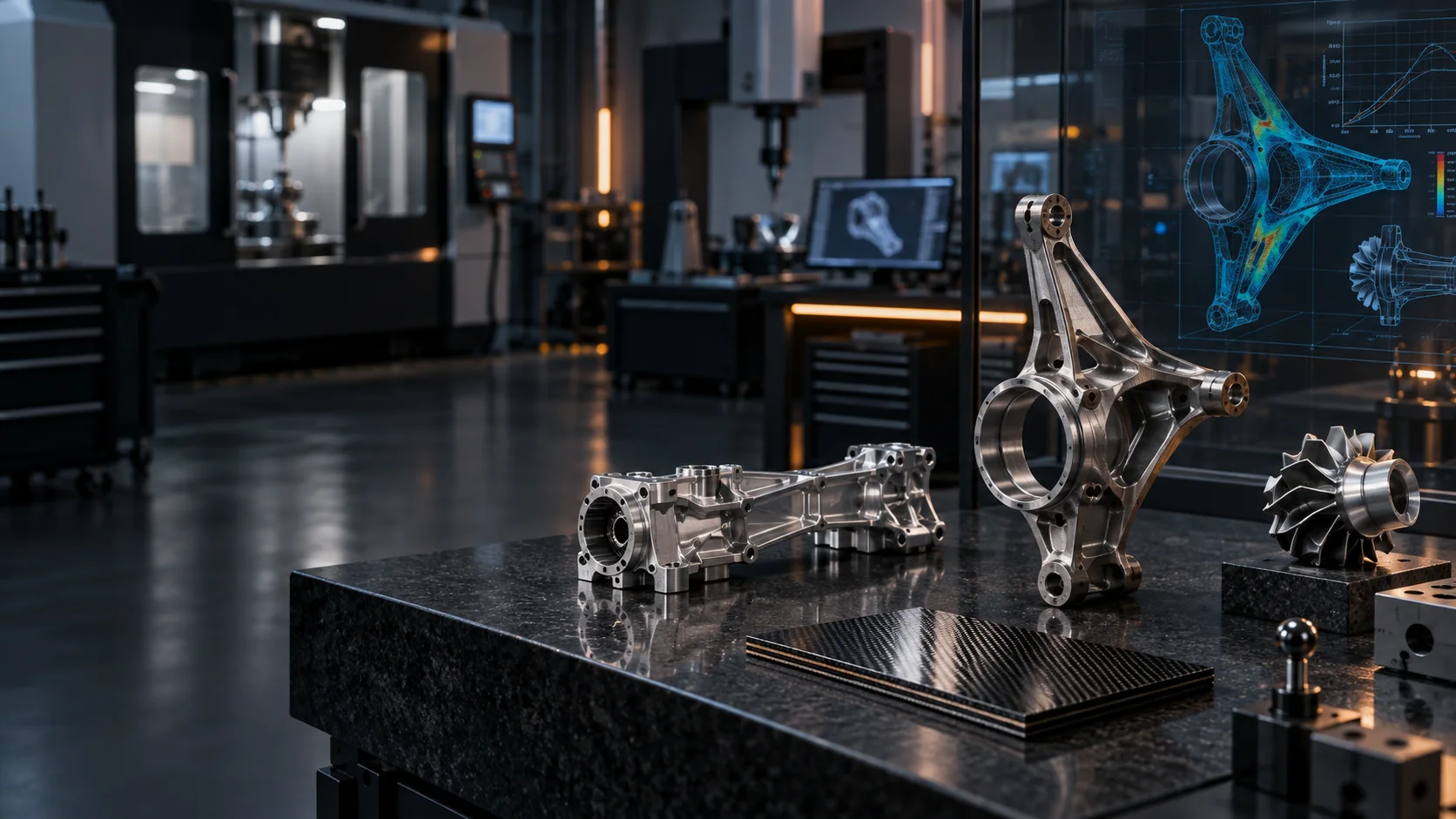
A model can rank concepts or identify relationships, but an engineer still has to release geometry, material, interfaces and acceptance requirements. Manufacturing then converts that release into a controlled route. Inspection feeds actual results back into the data system so the next model is trained on reality rather than assumption.
Where AI can help manufacturing
Document search, process planning assistance, anomaly detection, tool-life prediction, machine monitoring, inspection triage and scheduling are plausible industrial applications. Formula 1 teams do not publicly disclose every implementation. MBB labels public examples separately from general manufacturing uses.
The governance question
Speed does not remove configuration control. AI-generated analysis needs known inputs, versioned models or prompts where material, human review, access controls and a record of the decision. In a regulated or safety-critical environment, explainability and validation can matter as much as raw prediction quality.
Connect the engineering system
CNC machining
Follow design intent into workholding, datums, tools and controlled part release.
Open guide →Primary sources and verification
Official sources control current rules, partnerships and disclosed technology. MBB last checked these links on September 28, 2026.
Independent reference: Machine Blue Book is not affiliated with Formula 1, the FIA, McLaren or any team or partner. Names are used descriptively. No team logos, race photography or sponsor artwork are used.